Paw Pad Care in Summer: A Guide to Preventing Burns and Cracks
Summer walks can be hard on a dog’s paws. Pavement, sidewalks, sand, and metal surfaces can heat up quickly, and paw pads can burn before an owner realizes the ground is unsafe. Asphalt, artificial grass, and similar surfaces can cause discomfort, blisters, and burns, especially when outdoor temperatures rise and pavement has not had a chance to cool.
Heat is not the only concern. Dryness, cracking, rough terrain, debris, moisture, and overgrown fur between the pads can all create irritation. A dog that starts licking their paws, limping, or avoiding certain surfaces may already be uncomfortable.
Good dog paw care in summer is about prevention. With the right walking habits, protective products, hygiene routines, and regular inspections, dog owners can help keep paw pads healthy through the hottest months.
How to Protect Your Dog’s Paw Pads in Summer
Paw protection should become part of the daily summer routine, especially for dogs that walk on asphalt, sidewalks, sand, patios, or trails. Preventing injury is much easier than treating burned or cracked pads after a walk.
A few simple adjustments can lower the risk of painful paw problems and make summer outings safer.
Avoid Walking on Hot Surfaces
Pavement and sand can retain heat long after the air temperature feels manageable. A sidewalk that seems fine from standing height may be too hot for direct paw contact.
Before walking, use the hand test. Place the back of your hand or palm on the surface for several seconds. If it feels too hot for your skin, it is too hot for your dog’s paws. AAHA recommends avoiding hot pavement, sidewalks, sand, and metal surfaces because they can burn paw pads quickly during summer.
Early morning and later evening walks are usually safer than midday outings. Grass, shaded paths, dirt trails, and other cooler surfaces can also reduce paw stress. During extreme heat, a shorter walk with indoor enrichment may be safer than pushing through a normal route.
Use Protective Dog Booties
Booties create a physical barrier between paw pads and hot pavement, rough terrain, sharp debris, or irritating surfaces. They can be especially useful for dogs that live in dense urban areas, hike frequently, or need to cross hot sidewalks before reaching grass.
Fit matters. Booties should stay secure without rubbing, pinching, or changing the dog’s movement. Breathable materials are useful in summer because paws can still become warm and sweaty inside poorly ventilated footwear.
Many dogs need time to adjust. Start indoors with short sessions, reward calm movement, and increase wear time gradually. A dog that refuses booties at first may accept them once the experience feels familiar and positive. Dog boots can help protect paws from hot pavement, along with other harsh seasonal surfaces.
Apply Dog Paw Balm Regularly
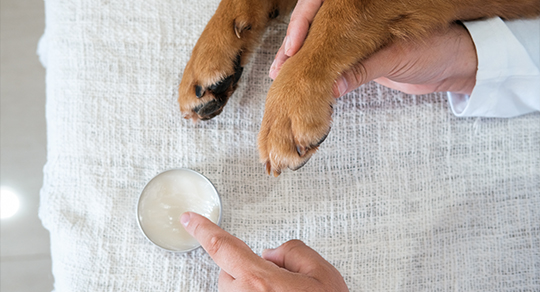
Paw pads need moisture and resilience, especially during hot, dry weather. A pet-safe dog paw balm can help reduce dryness and support the skin barrier before cracks develop.
Apply balm before walks when extra protection is needed, then again after outdoor time if pads look dry or rough. For active dogs, daily use may be appropriate during hot weather. Dogs with naturally dry pads may need it more often, while others may only need balm a few times a week.
Check the ingredient list before using any product. Paw products should be made for pets, since dogs may lick their paws after application. Avoid human lotions unless a veterinarian specifically recommends one.
Keep Paw Pads Clean and Dry
Summer paws collect more than dust. Dirt, lawn chemicals, pollen, sand, moisture, and small debris can sit between the toes and irritate the skin. Humid weather can also make moisture linger, especially in dogs with thick fur around the feet.
After walks, wipe each paw with a damp cloth or pet-safe wipe. Pay attention to the space between the toes, where grit and moisture often hide. Dry the paws thoroughly afterward, since trapped dampness can lead to irritation.
Swimming, rain, and wet grass deserve the same follow-up. Clean paws are helpful, but clean and dry paws are better. That small detail can prevent a lot of summer discomfort.
Trim Fur Around Paw Pads
Excess fur between the paw pads can trap heat, moisture, burrs, grass seeds, and dirt. It can also reduce traction on smooth indoor floors, making slips more likely.
Look at the bottom of the paw. If fur is covering the pads, collecting debris, or staying damp after walks, it may be time for a trim. A careful paw trim can improve cleanliness and help owners notice small cuts, cracks, or irritation sooner.
Trimming near paw pads should be done gently with appropriate tools. For wiggly dogs, heavily matted paw fur, or owners who are unsure, professional grooming is the safer route.
Inspect Paws for Damage Frequently
A quick paw check can catch problems before they become painful. Look for redness, swelling, cracks, peeling, cuts, blisters, bleeding, embedded debris, or unusual tenderness. Behaviour changes also matter. Limping, refusing to walk, licking one paw repeatedly, or pulling away when touched can point to pain.
Make inspections part of the routine after walks, playtime, hikes, and trips to the beach. If a paw looks burned, badly cracked, swollen, infected, or painful, contact a veterinarian. A professional groomer can help with hygiene, trimming, and maintenance, but injuries and suspected burns need veterinary guidance.
Common Mistakes in Dog Paw Care During Summer
The biggest summer mistake is walking during peak heat without checking the surface first. Pavement can be dangerous even when the air feels tolerable, especially in direct sun.
Another common issue is assuming paw pads are too tough to need attention. Paw pads are durable, but they are not burn-proof or crack-proof. Ignoring small signs, such as roughness, licking, or mild limping, can allow irritation to worsen.
Product misuse can also cause trouble. Too much balm may make paws slippery indoors, while non-pet-safe products can irritate skin or become unsafe if licked. Booties that do not fit properly may rub, trap heat, or make walking uncomfortable.
Good summer dog paw protection comes down to a few habits: test hot surfaces, walk during cooler parts of the day, use pet-safe products, keep paws clean and dry, and inspect pads often.
Protect Your Dog with Proper Dog Paw Care
Consistent dog paw care can help protect your dog from burns, cracks, dryness, debris, and summer discomfort. Hot surfaces should be avoided whenever possible, while booties, paw balm, regular cleaning, safe trimming, and frequent inspections can all support healthier paw pads. At APEX Academy, we understand how grooming and preventive care help dogs stay more comfortable through every season.
Reach out to APEX Academy today at (639) 307-6303, email us at info@zoomzoomgroom.com or click here to get in touch online.
Frequently Asked Questions About Dog Paw Care
How can I tell if the ground is too hot for my dog?
Use the hand test before walking. Place your hand on the pavement, sand, or sidewalk for several seconds. If it feels too hot for your hand, it is too hot for your dog’s paws. Be especially cautious on sunny days, during midday heat, and on dark surfaces that hold heat.
Can I use human moisturizers on my dog’s paws?
Human moisturizers are not recommended unless a veterinarian approves them. Some ingredients can irritate a dog’s skin or cause problems if licked. A pet-safe dog paw balm is the better choice because it is made for paw pads and normal dog behaviour.
How often should I apply paw balm in summer?
Many dogs benefit from paw balm a few times per week in summer. Active dogs, dogs that walk on rough or hot surfaces, and dogs with dry pads may need it daily. Watch the condition of the pads and adjust based on dryness, cracking, and activity level.
What should I do if my dog’s paw pads are cracked?
Clean the paw gently, keep it dry, and prevent your dog from licking the area excessively. A pet-safe balm may help with mild dryness, but deep cracks, bleeding, swelling, limping, or signs of infection should be checked by a veterinarian. Once the paw has healed, focus on prevention through surface checks, balm, and regular inspections.
Are dog booties necessary in summer?
Booties are useful for dogs that walk on hot pavement, rough trails, sand, or urban sidewalks. They are not always necessary if your dog can stay on cool grass or walk during cooler hours. If your dog dislikes booties, try gradual training, shaded routes, shorter walks, paw balm, and careful surface testing.