Inside Professional Pet Groomer Training: What Future Groomers Should Expect
Becoming a dog groomer involves much more than learning how to trim a coat. Professional grooming brings together practical technique, knowledge of different dogs and coats, safe working habits, communication with pet owners, and the ability to adapt from one appointment to the next.
For someone considering a pet grooming career, understanding what training may involve can make it easier to compare programs and decide whether the profession fits their interests. While curricula differ between schools, professional education should give prospective groomers a clearer idea of both the technical work and the everyday responsibilities involved.
What Future Dog Groomers Learn During Professional Training
Pet groomer training develops several abilities that have to work together in a professional environment. Students aren't simply learning one grooming method. They're building knowledge they can apply as they encounter different dogs, grooming requests, and working situations.
Understanding Canine Coats and Grooming Needs
Dogs can have very different coats, and those differences affect how a groomer approaches their care. Future groomers need to recognize that an appropriate grooming plan depends on the individual animal rather than following the same routine for every appointment.
Training can help students learn to consider coat characteristics, grooming requirements, and the desired result before deciding how to proceed. That foundation becomes increasingly important as practical skills develop because technique is most useful when a groomer understands why and when to apply it.
Learning Grooming Tools and Equipment
Professional grooming also requires familiarity with the tools used to complete different parts of the job. Learning their purpose is more useful than simply memorizing equipment names.
Students need opportunities to understand when a tool is appropriate, how it fits into the grooming process, and how to handle equipment carefully while they work. Building those habits early can help future groomers become more deliberate instead of treating every tool as interchangeable.
Developing Bathing and Coat-Care Skills
Styling may be one of the most visible parts of grooming, but coat preparation is an important part of the overall process. Different dogs can require different approaches depending on their coats and grooming needs.
Professional education can help students understand how coat care connects with the work that follows. Rather than treating bathing, preparation, and styling as unrelated tasks, future groomers learn to think about how each stage contributes to the complete appointment.
Building Practical Grooming and Styling Skills
Hands-on learning is a major consideration when comparing pet groomer training options. Understanding a grooming concept in theory is different from applying it while working with an actual dog.
As students gain experience, they can begin connecting what they've learned with practical technique and adapting their approach to different coats and requested outcomes. A professional dog groomer rarely works with identical circumstances from one appointment to another, so practical development involves learning to make informed adjustments rather than repeating a fixed routine.
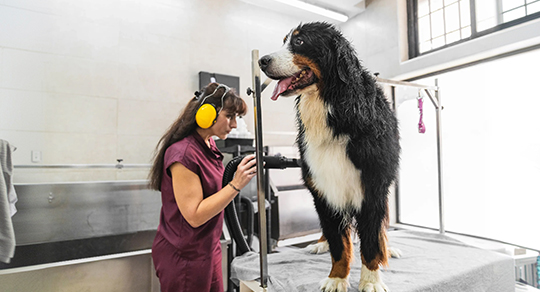
APEX Academy specifically combines theoretical education with supervised hands-on experience. Our students work with real pets while receiving guidance from experienced instructors, giving them opportunities to apply what they're learning in a working grooming environment.
Learning to Work With Individual Dogs
Technical skill is only part of grooming. Dogs also differ in temperament, comfort with handling, age, previous grooming experience, and how they respond during an appointment.
Future groomers need to pay attention to the animal in front of them and recognize when their approach may need to change. This doesn't mean diagnosing behavioural or medical concerns. It means developing the awareness required to work thoughtfully with individual pets rather than treating each appointment like an identical technical exercise.
Developing Client Communication Skills
A dog groomer also works with people. Owners need opportunities to explain what they want, share relevant information about their dog, and understand what to expect from the appointment.
Clear communication starts with asking useful questions and confirming grooming preferences instead of making assumptions. Groomers may also need to explain grooming-related observations or appointment information in language an owner can understand, while staying within the appropriate limits of their professional role.
At APEX Academy, our program includes client interactions and business fundamentals among the areas students may encounter during their education, reinforcing that grooming work involves more than hands-on technique.
Preparing for the Professional Grooming Environment
As training progresses, these separate skills begin to connect. Coat knowledge influences technical decisions, practical ability has to account for the individual dog, and communication helps establish clear expectations with owners.
Anyone considering a pet grooming career should look at how a training program brings those areas together. A useful question isn't simply, “Will I learn grooming?” It is whether the learning experience matches the type of professional environment and responsibilities you hope to pursue.
What to Look for in a Pet Groomer Training Program
Training programs can differ considerably, so prospective students should find out exactly what they're enrolling in rather than assuming every course provides the same experience.
Before making a decision, ask:
- What topics and practical skills does the curriculum cover?
- How is classroom or theoretical learning combined with practical work?
- Will I have opportunities to work with different dogs and coat types?
- How is hands-on learning supervised?
- What access will I have to instructor guidance and feedback?
- What will I be expected to know or demonstrate as I progress?
- What are the program's schedule, costs, requirements, and completion expectations?
APEX Academy is a government-registered grooming institution, and our programs combine theoretical instruction with supervised hands-on training. We emphasize small classes, instructor feedback, and practical experience with different breeds and coat types.
Is a Pet Grooming Career Right for You?
A pet grooming career can appeal to someone who enjoys working directly with animals, but interest in dogs alone doesn't capture the whole job. Groomers also develop technical skills, work with tools and equipment, communicate with owners, and continually adjust their approach to different animals and grooming requirements.
Consider whether that combination suits the kind of work you want to do. Hands-on professions also require patience while skills develop. Training provides an opportunity to learn what professional grooming actually involves before making assumptions about the career based only on the finished haircuts you see afterward.
Research different working environments and education options, then compare them with your longer-term goals. No training program can guarantee a particular job or career outcome, but understanding what you're preparing for can help you make a more informed choice.
Start Your Path Toward Becoming a Dog Groomer
Professional education can help someone interested in becoming a dog groomer develop both grooming knowledge and practical experience in a structured learning environment. APEX Academy offers a Canine All-Inclusive Grooming Program for prospective students exploring professional canine grooming education.
Reach out to APEX Academy today at (639) 307-6303, email us at info@zoomzoomgroom.com or click here to get in touch online.
Frequently Asked Questions
Do You Need Professional Training to Become a Dog Groomer?
Training requirements can depend on where you plan to work, the employer, and the career path you intend to pursue. Prospective groomers should research any requirements that apply to their particular situation.
Structured education may appeal to people who want guided instruction, feedback, and opportunities to develop grooming knowledge alongside practical skills instead of trying to learn the work entirely on their own.
What Should I Ask Before Enrolling in Pet Groomer Training?
Ask about the curriculum, learning format, practical experience, instructor support, costs, scheduling, program requirements, and what completion involves.
It is also useful to ask how students progress from theory into practical work and what they will be expected to demonstrate during the course. Get these answers directly from the training provider rather than assuming one program operates like another.
How Long Does Pet Groomer Training Take?
Program length varies according to the provider, curriculum, format, and schedule. A more useful comparison is the stated duration and time commitment of each specific program you're considering.
Ask the training provider how the program is structured and what attendance or practical commitments students should expect before enrolling.
What Skills Are Useful for a Pet Grooming Career?
Professional grooming draws on several skill areas. Practical grooming ability matters, but so do attention to individual dogs, careful working habits, communication with owners, and the ability to apply grooming knowledge in different situations.
Developing those abilities is an ongoing process. Completing a training program can provide a structured foundation, but it shouldn't be treated as a guarantee of professional competence or employment.