Grooming Kittens 101: Starting Your Kitten’s Grooming Habits Early
New kitten owners often worry about scratching, stress, nail trims, matting, and the fear of grooming tools. The good news is that kitten grooming does not need to begin with a complicated routine. Early grooming is mostly about gentle handling, short sessions, and helping your kitten learn that brushing, paw touching, and basic care can feel calm and normal.
Early Cat Grooming Habits That Support Better Kitten Care
Young cats are still learning what feels safe. A brush, nail clipper, towel, or carrier may seem strange at first, even when nothing scary is happening. Starting early gives kittens time to build trust before they need more involved coat care.
The goal is not to force a full grooming session. It is to create small, positive experiences that support better kitten care as your cat grows.
Start With Short, Gentle Handling Sessions
Grooming starts before a brush or clipper ever touches your kitten. Many future grooming tasks involve handling sensitive areas, so a gentle touch can help a kitten become more comfortable over time.
Keep sessions brief, especially at first. A few calm seconds of touch can be more useful than a long session that ends with the kitten frightened or frustrated. Pair handling with a soft voice, praise, and rewards when appropriate, then stop before your kitten reaches their limit.
Gently handle areas such as:
- Paws
- Ears
- Tail
- Belly
- Chin
- Back and shoulders
Start small with nervous or shy kittens. Touch one paw briefly, release, and let them settle. Those tiny steps can make future brushing, nail trims, and grooming appointments feel less stressful.
Introduce A Soft Brush
Brushing can begin as a comfort-building habit, not only as a response to tangles or shedding. A kitten-safe brush lets your young cat get used to the feeling of grooming tools before coat care becomes more necessary.
A first brushing session can be very simple:
- Let your kitten sniff or inspect the brush.
- Offer one or two gentle strokes along the back or shoulders.
- Pause before your kitten becomes irritated.
- Reward calm behaviour when appropriate.
- Try again another day and slowly build from there.
Choose areas your kitten already accepts before moving to more sensitive spots. Long-haired kittens may need more brushing support as they grow because skipped brushing can lead to tangles and mats. Short-haired kittens may not need as much coat maintenance, but gentle brushing still helps build a familiar grooming routine.
Help Your Kitten Get Comfortable
Paw handling is a major part of kitten care because it prepares your kitten for nail trims. Many cats dislike nail clipping because they are not used to having their paws touched, held, or gently positioned.
Try a slow mini-process:
- Touch one paw gently.
- Hold it briefly without squeezing.
- Release before your kitten pulls away.
- Reward calm behaviour.
Practise when your kitten is relaxed or sleepy, not when they are racing around the room with full kitten chaos activated. Over time, you can work toward gently exposing the nails, then eventually trimming when appropriate. If you are nervous about trimming nails, ask a professional groomer or veterinary team for help before attempting it on your own.
Make Nail Trims Slow
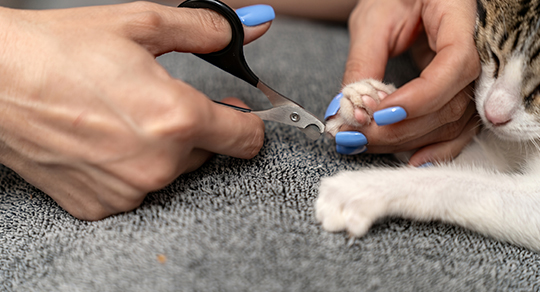
Nail trims often become stressful when owners try to finish every nail at once. Kittens may tolerate the process better when it is slow, calm, and broken into smaller steps.
Do:
- Use cat-appropriate nail clippers
- Trim only the sharp tip
- Keep the session short
- Trim one or two nails at a time if needed
- Stop if your kitten becomes too stressed
Do not:
- Squeeze the paw tightly
- Rush through all nails during a stressful session
- Cut near the quick
- Punish or scold your kitten for pulling away
The quick is the sensitive part inside the nail. Cutting it can hurt and may cause bleeding, so trim conservatively. Professional groomers or veterinary teams can help if you are unsure where to cut or if your kitten is too wiggly for safe trimming.
Get Your Kitten Used To Grooming Tools
Kittens can be startled by unfamiliar objects, sounds, and sensations. A tool does not have to be used right away for your kitten to begin getting comfortable with it.
Helpful items to introduce gradually include:
- Soft brushes
- Combs
- Nail clippers
- Towels
- Carriers
- Clippers or dryers, if they may be used in the future
Place tools nearby while your kitten is calm. Let them sniff a brush before you use it, or leave the carrier open in a quiet space, so it becomes part of the room instead of a sudden event. Sounds should be introduced at a low, gentle level where possible. Avoid pushing tools close to your kitten if they seem frightened, since forced exposure can make future cat grooming more intimidating.
Build A Calm Routine Around Grooming Time
Predictability helps many kittens feel safer. A quiet space, a calm tone, and a short routine can make grooming feel like an ordinary part of life rather than a surprise interruption.
A simple kitten grooming session might look like this:
- Choose a quiet room with limited distractions.
- Wait until your kitten is relaxed, not highly energetic.
- Offer a few seconds of gentle handling.
- Use a soft brush for a few strokes.
- Touch one paw briefly.
- End with praise, a treat, or a favourite calm activity.
Keep the environment peaceful by reducing loud noises, moving slowly, and using the same gentle approach each time. Ending on a positive note can help your kitten remember grooming as manageable rather than overwhelming.
Watch For Coat, Skin, Or Behaviour Changes
Early grooming gives you a regular chance to notice what is normal for your kitten. The more familiar you are with their coat, skin, and comfort level, the easier it becomes to spot changes.
During grooming, look for:
- Tangles or early mats
- Debris caught in the coat
- Dandruff or flaking
- Redness or irritation
- Unusual shedding
- Strong reactions to touch in one area
- Behaviour changes during handling
Long-haired kittens may develop mats if brushing is skipped, especially around areas that rub or tangle easily. If you notice any concerning skin, coat, or behaviour changes, speak with a veterinarian or qualified pet care professional for advice.
When To Consider Professional Kitten Grooming Support
Some kittens need extra help with grooming, and some owners simply want guidance before trying tasks like nail trims or coat maintenance at home. Professional support can be useful for nervous kittens, long-haired kittens, early matting, nail trim anxiety, or owners who feel unsure.
Signs your kitten may benefit from grooming support include:
- Tangles that are hard to brush out
- Early mats in a long coat
- Strong stress during brushing
- Anxiety around paw handling or nail trims
- Dirt or debris that keeps getting caught in the coat
- An owner who is unsure which tools to use
A groomer can help introduce safe handling and basic grooming routines in a gentle way. Early appointments may also help kittens become more comfortable with future grooming visits. Before booking, ask what the appointment includes, how kittens are handled, and whether the service is appropriate for your kitten’s age, coat, and comfort level.
Keep Kitten Grooming Gentle, Early, And Consistent
Starting kitten grooming early can help your young cat feel more comfortable with brushing, nail trims, gentle handling, and future grooming routines. APEX Academy can help pet owners understand early grooming habits through professional cat grooming services designed to support better kitten care from the start.
Reach out to APEX Academy today at (639) 307-6303, email us at info@zoomzoomgroom.com or click here to get in touch online.
FAQs About Kitten Grooming
When should I start grooming my kitten?
Kitten grooming can start early with gentle handling, short brushing sessions, and calm exposure to grooming tools. The goal is to help your kitten feel comfortable before grooming becomes more necessary.
Do kittens need professional grooming?
Some kittens may benefit from professional grooming support, especially long-haired kittens, nervous kittens, or kittens that need help with nail trims or early matting. Not every kitten needs a full grooming appointment right away.
How often should I brush my kitten?
Brushing frequency depends on the kitten’s coat type. Long-haired kittens usually need more frequent brushing, while short-haired kittens may need less, but regular, gentle brushing can still help build good grooming habits.
How can I make nail trims less stressful for my kitten?
Start by gently touching your kitten’s paws before attempting a nail trim. Keep sessions short, use cat-appropriate clippers, trim only the tip, and ask a professional for help if you are unsure.
What if my kitten hates being brushed?
Start slowly with very short sessions and a soft brush. Let your kitten sniff the brush, use calm handling, and stop before the kitten becomes too stressed so grooming does not feel frightening.