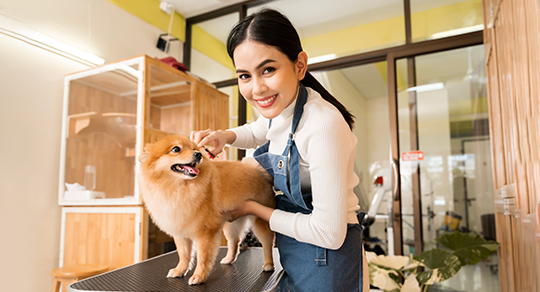
Becoming an Expert at Pet Grooming: 10 Skills You Should Have as a Pet Groomer
Pet grooming is more than washing, brushing, clipping, and trimming. Strong groomers need technical ability, animal care knowledge, patience, communication, safety awareness, and the confidence to work with different pets and personalities. None of that develops overnight. Skill grows through training, repetition, feedback, and real experience with pets that do not all behave the same way.
At APEX Academy, we look at pet grooming as a hands-on profession that blends technique with judgment. A groomer needs to understand coats, tools, handling, hygiene, pet comfort, and client expectations, all while working carefully and efficiently. That is why pet grooming training and dog grooming training matter. They give future groomers a more structured way to build practical skills over time.
The Technical and Soft Skills Behind Expert Pet Grooming
Expert pet grooming depends on more than clipper work alone. A polished groom can start with a bath, but it also depends on how the pet is handled, how the coat is assessed, how the tools are used, and how the groomer responds when the pet is nervous, matted, sensitive, or difficult to settle.
Training helps future groomers build these skills with guidance and feedback. It does not make someone an expert in a weekend, but it can create a stronger foundation for working safely and professionally. Here are 10 of the most important skills to develop.
1. Animal Handling and Pet Safety
Safe, calm handling is one of the most important pet grooming skills. Groomers need to read body language, recognize signs of stress, and adjust their approach when a pet becomes fearful, overstimulated, or uncomfortable.
That protects the pet and the groomer. A nervous senior dog may need a slower pace, while an excitable puppy may need extra control and reassurance before grooming can continue safely.
2. Coat and Breed Knowledge
Different coats need different grooming approaches. Short coats, long coats, double coats, curly coats, and wire coats all behave differently, and the wrong technique can create unnecessary problems.
This is especially important in dog grooming training, where coat and breed differences affect brushing methods, de-shedding work, trimming decisions, and haircut planning.
3. Bathing, Drying, and Skin Awareness
Bathing and drying are technical skills, not simple prep steps. Groomers need to choose suitable products, rinse thoroughly, and dry the coat properly so moisture does not stay trapped near the skin.
They also need to notice when something does not look normal. A groomer should not diagnose medical issues, but they should know when a pet owner may need veterinary guidance.
4. Brushing, De-Shedding, and Mat Prevention
Brushing and de-shedding are core pet grooming skills because they support coat health and comfort. Groomers need to remove loose fur, reduce tangles, and spot mats before they become more severe.
Problem areas often show up behind the ears, under the legs, around the belly, near the tail, and under collars or harness points. Good groomers also explain home brushing needs without overwhelming the owner.
5. Clipper, Scissor, and Tool Control
Tool control affects safety and finish quality. Groomers need to understand how to use clippers, blades, guards, scissors, combs, brushes, dryers, and nail tools with steady hands and good awareness.
That includes hand positioning, safe angles, pressure control, and careful work around sensitive areas. Technical tool skill takes supervised practice. It is not something most people master just by watching a few demonstrations.
6. Attention to Detail and Finishing Work
Strong grooming results often come from small finishing choices. Checking evenness, cleaning paw pads, tidying the face where appropriate, smoothing rough areas, and reviewing the coat after drying all affect the final result.
Detail matters for appearance, but it also matters for comfort. A pet should leave looking cared for and feeling comfortable in the groom.
7. Patience With Nervous, Energetic, or Sensitive Pets
Patience is a professional skill. Groomers often work with pets who are wiggly, anxious, loud, elderly, excitable, or sensitive about certain parts of the process.
Rushing through that can increase stress and safety risks. A patient groomer knows when to slow down, when to adjust the pace, and when a pet needs a calmer approach to get through the appointment well.
8. Communication With Pet Owners
Groomers also need to communicate clearly with pet owners before and after appointments. That includes understanding the owner’s goals, explaining realistic outcomes, and discussing coat condition or maintenance needs.
This becomes especially important when a requested style is not safe or realistic because of matting, coat condition, or the pet’s tolerance for grooming. Clear, kind communication builds trust.
9. Time Management and Salon Readiness
Professional grooming also depends on the organization. Groomers need to manage appointment flow, keep tools ready, maintain a clean workspace, and allow enough time for bathing, drying, trimming, and finishing.
Being organized supports safety as much as efficiency. A rushed workspace can affect quality and make handling more difficult.
10. Willingness to Keep Learning
Pet grooming is a field where learning never really stops. Groomers continue improving through practice, feedback, new tools, exposure to different coats, and experience with different temperaments.
That mindset matters in pet grooming training and dog grooming training. Strong groomers stay curious, keep refining their technique, and build confidence by continuing to learn rather than assuming they already know enough.
How Pet Grooming Training Helps Build These Skills
Structured pet grooming training can help aspiring groomers build both technical and soft skills in a guided environment. Learning from experienced instructors, practising techniques, receiving feedback, and understanding safety all help future groomers develop a stronger foundation.
That kind of training can support progress with handling, bathing, drying, brushing, tool use, finishing work, communication, and general salon readiness. Dog grooming training also helps students apply those fundamentals in practical, hands-on ways so the skills become more usable outside the classroom.
Start Building Your Pet Grooming Skills With Training
Expert pet grooming takes more than a love of animals. It requires safe handling, coat knowledge, tool control, patience, communication, and the willingness to keep learning. Pet grooming training can help future groomers build a stronger foundation for working with pets professionally.
Reach out to APEX Academy today at (639) 307-6303 or click here to get in touch online.